
How to Read Your Tenancy Agreement Reinstatement Clause in Malaysia
Not sure what your tenancy agreement reinstatement clause means? This guide explains how to read and understand your reinstatement obligations as an office tenant in KL and Selangor.
Rachel Yeong
3/18/20266 min read
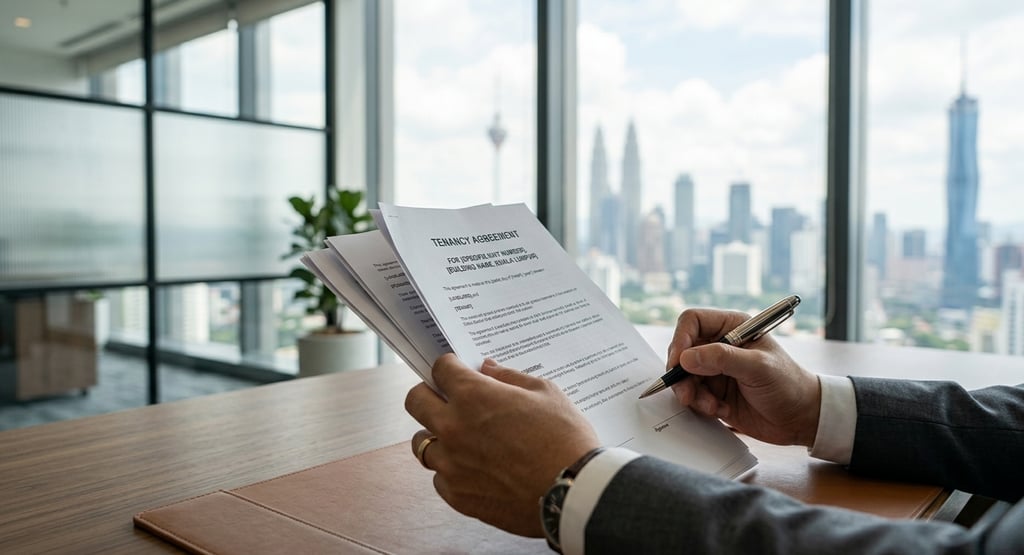
Most office tenants in Malaysia sign their tenancy agreement, file it away, and never look at it again until they are about to move out. By then, they are often surprised to discover exactly what the reinstatement clause requires them to do before handing back the keys. Understanding your reinstatement clause from day one can save you thousands of ringgit and a great deal of stress when your lease ends. This guide explains what to look for, what the common clauses mean, and how to use the information to plan your move-out properly.
What Is a Reinstatement Clause?
A reinstatement clause is a section in your tenancy agreement that sets out your obligations as a tenant to restore the rented office space to its original condition before the lease ends. It is a legally binding contractual obligation. If you fail to comply, your landlord has the right to forfeit your deposit, hire their own contractor and charge you for the cost, or pursue legal action if the reinstatement cost exceeds your deposit amount.
The reinstatement clause is usually found towards the end of the tenancy agreement, often under a section titled Tenant's Obligations, Yielding Up, or Reinstatement and Restoration. In some agreements it may also appear as a separate schedule or addendum attached to the main document.
Key Terms You Will Find in the Reinstatement Clause
Before reading your clause, it helps to understand the common legal terms used in Malaysian commercial tenancy agreements.
Yield up means to return or hand back the property to the landlord. When the clause says you must yield up the premises in good repair and condition, it means you must return the office in an acceptable state.
Original condition or original state refers to the condition the office was in when you first took possession of it at the start of the tenancy. This is usually described in a schedule of condition or supported by handover photos attached to the agreement.
Fair wear and tear refers to the normal and reasonable deterioration of a property through everyday use over time. Most tenancy agreements in Malaysia exempt tenants from being responsible for fair wear and tear, meaning you are not required to fix minor scuffs or normal ageing of the space. However, structural modifications, added fixtures, and renovation works are not considered fair wear and tear and must be reinstated.
Fixtures and fittings refer to items that have been attached or fixed to the property. Partitions, built-in cabinets, false ceilings, and fixed lighting are examples of fixtures. The reinstatement clause will usually require the tenant to remove all fixtures added during the tenancy unless the landlord agrees otherwise in writing.
Reinstate or restore means to bring the property back to its original condition by removing all additions, repairing all damage, and repainting or restoring all surfaces as required.
What to Look For in Your Reinstatement Clause
When reading your tenancy agreement reinstatement clause, focus on these five key areas.
The first is the scope of reinstatement. This tells you exactly what must be removed or restored. Look for specific mentions of partitions, ceilings, flooring, lighting, M&E works, signage, and any other items. The more specific the clause, the clearer your obligations are.
The second is the standard of reinstatement. Some clauses require you to restore the office to its original condition as evidenced by handover photos or a schedule of condition. Others are less specific and simply state good and tenantable repair. The more specific the standard, the easier it is to know exactly what is expected.
The third is the deadline. Most reinstatement clauses require all works to be completed before the lease expiry date. Some clauses allow a short grace period after the lease ends but this is not common. If you miss the deadline, the landlord may charge you holdover rent for every day the office is not handed back in the required condition.
The fourth is the landlord's right to reinstate. This is the penalty clause. It usually states that if the tenant fails to complete reinstatement by the required date, the landlord has the right to appoint their own contractor and deduct the cost from the deposit. Any cost exceeding the deposit amount is recoverable from the tenant.
The fifth is any agreed exceptions. Some tenancy agreements include agreed exceptions where certain fixtures or improvements are allowed to remain. For example, the landlord may agree to keep a pantry counter or a specific type of flooring. These exceptions should be clearly stated in writing in the agreement or in a separate letter of consent from the landlord.
How to Use the Original Condition as Your Reference
The reinstatement clause is most useful when read together with the original condition of the office at the start of your tenancy. Here is how to find and use this reference.
Check if your tenancy agreement includes a schedule of condition. This is a written description or list of the condition of every part of the office at the time of handover, including walls, floors, ceilings, doors, windows, and M&E items. If one exists, use it as your baseline for reinstatement.
Check if handover photos were taken and attached to the agreement or provided separately when you first received the keys. These photos are the clearest evidence of what the original condition looked like and what your reinstated office should match.
If neither a schedule of condition nor handover photos exist, try to find any original floor plans, design drawings, or correspondence from the landlord or agent that describes the original fit-out. You can also contact your landlord or building management to request records of the original base building condition.
If none of this is available, your reinstatement contractor can conduct a site assessment to determine what appears to be original base building condition versus what was added by your tenancy.
Common Reinstatement Clause Scenarios in Malaysia
Here are some real-world scenarios that office tenants in KL and Selangor commonly encounter when reading their reinstatement clause.
In the first scenario, the clause says the tenant must reinstate the premises to the original condition as per the handover condition report. This is the clearest type of clause. You simply need to restore the office to match the condition documented at the start of the tenancy. Request a copy of the handover condition report from your landlord if you do not already have one.
In the second scenario, the clause says the tenant must remove all partitions, false ceilings, and additions and restore the premises to good and tenantable repair. This is a common clause in KL and Selangor commercial leases. It requires you to remove all additions and return the space in a clean, repaired, and presentable condition even if it does not match the exact original state in every detail.
In the third scenario, the clause says the tenant must reinstate the premises to the landlord's satisfaction. This is a broader clause that gives the landlord more discretion to determine whether reinstatement has been done properly. If your agreement includes this type of clause, it is especially important to communicate with your landlord early and agree on the expected scope and standard in writing before works begin.
In the fourth scenario, the clause says the tenant is not required to reinstate provided the premises are returned in good condition. This is a tenant-friendly clause that waives the full reinstatement obligation. However it still requires you to return the office in a clean and acceptable state, so basic repairs and cleaning are still expected.
What to Do If You Are Unsure About Your Clause
If your reinstatement clause is unclear or you are not sure what it requires, here are your options.
Ask your lawyer to review the clause and explain your obligations in plain language. This is especially important for large offices or high-value deposits where the financial stakes are significant.
Contact your landlord or property manager directly and ask them to clarify in writing what reinstatement scope they expect. Get their response in email or letter form so you have a written record.
Engage a professional reinstatement contractor in KL for a free site visit. An experienced contractor will be familiar with standard reinstatement clauses in Malaysia and can advise you on what is typically required based on the wording of your agreement and the current condition of the office.
Negotiating Your Reinstatement Clause Before Signing
If you are about to sign a new tenancy agreement and have not yet moved in, this is the best time to review and negotiate the reinstatement clause. Here are a few things you can try to negotiate.
Ask for a detailed schedule of condition and handover photos to be attached to the agreement so the original condition is clearly documented from day one. Ask whether certain fixtures or improvements will be waived from reinstatement if they add value to the property. Ask whether the landlord would consider including a reinstatement cap that limits the maximum cost you would be responsible for. Ask whether a cash settlement option is available at the end of the tenancy in lieu of physical reinstatement works.
Not all landlords will agree to these requests but it is always worth asking before you sign. What is agreed verbally must be put in writing in the agreement or in a signed side letter to be legally enforceable.
Need Help Understanding Your Reinstatement Obligations?
If you are a tenant in KL or Selangor and are unsure about your reinstatement clause or how to plan your move-out, our team at reinstate.my can help. We provide free site visits, help you interpret your tenancy agreement requirements, and manage the full reinstatement process from start to handover. Contact us today via WhatsApp or fill in our enquiry form and we will respond within 24 hours.
buildingreinstate© 2026. All rights reserved.
Building Reinstate
Delivering expert strip-out, reinstatement, and property handover solutions
Contact Us
KL Address
16,Jalan 19/62B, Bandar Menjalara, 52200, WP Kuala Lumpur, Malaysia
Penang Address
11A, Lintang Talang 2, Taman Prai, 13700, Perai, Penang, Malaysia
KL Store Address
Lot No.18 Plot A2, Jalan Udang Harimau 2, Medan Niaga, Kepong 52100, WP Kuala Lumpur, Malaysia
Office Phone
+603-62635576
Whatsapps
Website
